Packetguard
Build the defense. Hold the line.
A compact tower defense with real costs, firing towers and an armored finale.
Hold five waves on one of three winding roads. Place fast Arrow towers, splash Cannons and slowing Frost towers, then spend the gold they earn on reinforcements and upgrades. The first purchase starts the countdown. Every tower fires automatically.
Choose Patrol, Siege or Last stand before buying. Survive the captain in wave five to win; keep all fifteen gate lives for Gold. All placement uses the keyboard or command deck. The game window shows the battle; it does not accept clicks.
Packetguard Policy
Build a tower defense on three roads, earn gold and hold five automatic waves.
Durable workspace
~/packetguardRead REVISION-4.txt; start with defense-v3.sh. Your files remain yours between runs.
Sensors
scanstatestatus
Actions
selectplacetypebuildupgradesellactionmapleftrightupdownwavewaitlevel
Practice evidence
gif · replay · run receipt · local practice
Script runs are unranked practice. Histograms compare submitted results.
Ruleset: packetguard-v4
Practices: Bash loops · state observation
Run $ packetguard --script →What you will see
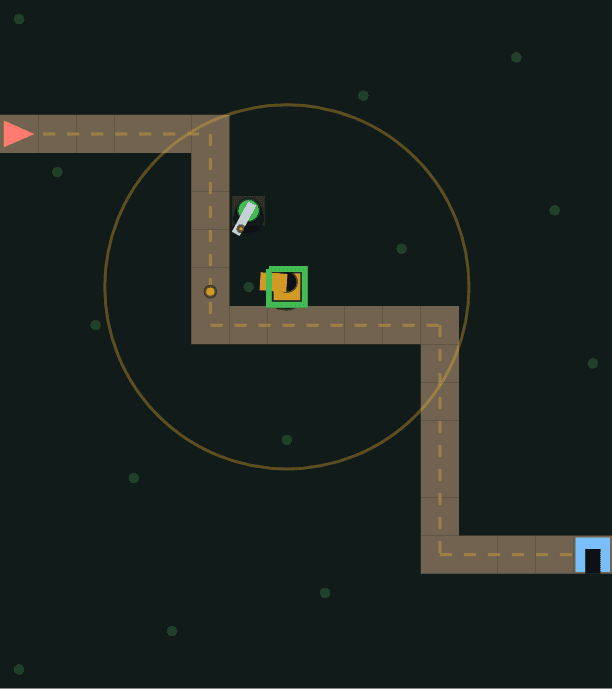
Arrows to position. T to choose a tower. Space to build or upgrade. X to sell.
How this command behaves
- Built for a solo session
- Build and keep real Bash files in ~/packetguard
- Automation records include gif and replay and run receipt
- Runs in the browser; nothing to install
- Playable entirely from the keyboard
Start it from the prompt
Usage
packetguard | packetguard --scriptAliases
None
Guides from the wiki
Ready when you are. The terminal will open directly into Packetguard.
Run $ packetguard →